Feedback for stage two is now closed.
Thanks for having your say. We are currently analysing the feedback to develop a long list of transport options.
What changes can we expect to see in Cambridge?
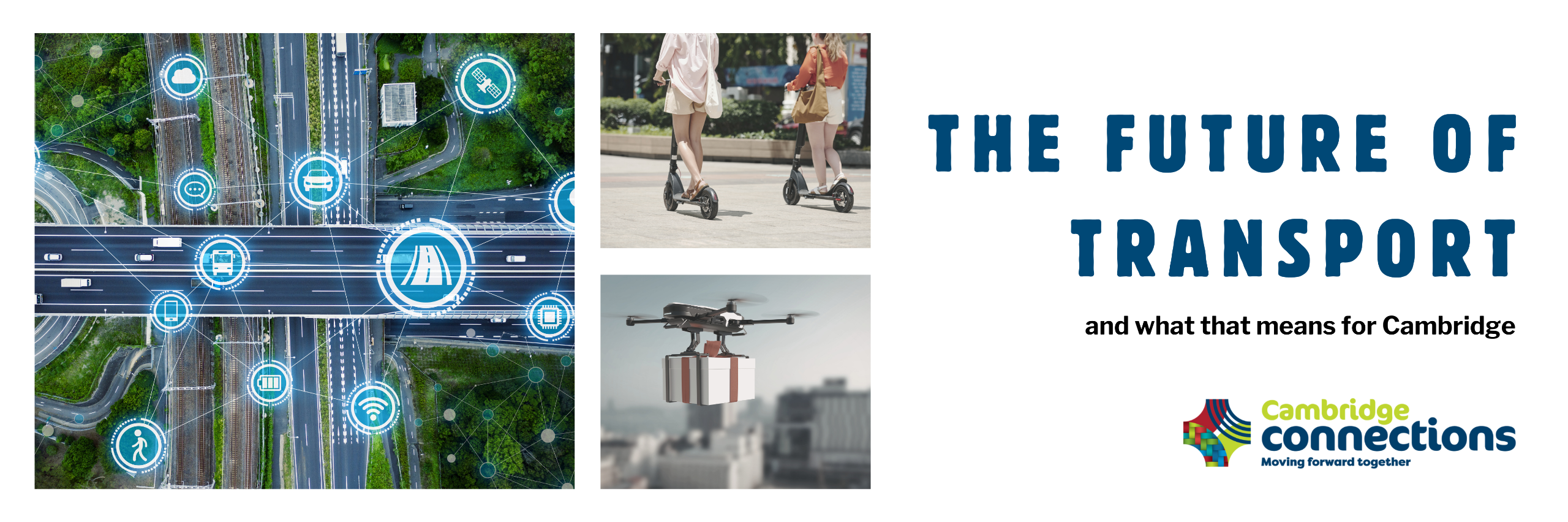
Technology over the coming decades has the potential to improve safety, enhance the environment and provide greater choice for getting around. Here's a quick look at the findings of the NZ Transport Agency report into the future of transport for our town:
Short term
(available now in New Zealand or elsewhere)
- Advanced driver assistance systems in vehicles reduces the likelihood they will be involved in an accident.
- Illuminated markers and lines at rural intersections can provide greater visibility of intersections at night, reducing the likelihood of accidents.
- Increasing use of micro-mobility, such as e-scooters and mobility scooters, that use our cycleways.
- Apps that can monitor parking.
- Introduction of public transport within Cambridge.
Medium term (5+ years)
- Smart infrastructure can be used to provide information directly to vehicles (or potentially mobile phones) so drivers are warned early about road hazards.
- Pricing or other mechanisms enable vehicle types to be restricted from some parts of the network (eg. heavy vehicles from the CBD).
- Commercial and public transport vehicles will be increasingly autonomous, removing driver safety risk.
- Greater electrification of all vehicle types.
- Vehicles able to park automatically.
Long term (10+ years)
- Autonomous vehicles will become available for private buyers, which have a lower risk of accident than human driven vehicles
- All vehicles will eventually be electric.
- Emergence of non-road options, such as air taxis and drones.
Discussion board
This is your space to share ideas, documents, ask questions and make comments. Our technical team won't be involved in this space - this is for you to share your perspectives and expertise. This discussion board is not formal feedback - although key themes and ideas will be captured in this space and added to the brainstorm of ideas being gathered.
What new technologies could bring the biggest benefits for Cambridge?
Setting ourselves up for success as we give feedback
To submit feedback
- Pick up a form from council offices or libraries
Download this map if you want to draw routes or add your ideas visually onto a map. Feel free to upload your document to the discussion thread.
Additionally, if you would like to submit your map as formal feedback, you can:
- Scan and email to: cambridgeconnections@waipadc.govt.nz
- Subject Line: Cambridge Connections stage two feedback
- Drop off your map into the feedback box at Waipā council offices or libraries
Heavy weight issues: What do we do about freight?
Building bridges, what's really involved
Is a bus service within Cambridge really possible?
Dive into some more technical information below.
Community feedback will inform the technical work behind the development of our 30-year transport plan.
In this stage, NZ Transport Agency requires us to gather a diverse range of ideas about the full spectrum of transport options – from low-cost solutions that can provide some quick wins, to large scale future projects.
These ideas will be assessed against a set of criteria, which will be decided by Elected Members, and developed into a ‘long list’ of transport options.
The NZTA Intervention Hierarchy guides the sequence of what we should consider first when planning transport, and what comes later.
- First we think about integrated planning – coordinating land use with transport to maximise use of the existing network capacity, reducing demand for transport and support transport choices e.g. planning new homes close to bus services, mixed use neighbourhoods or planning of schools or community services close to residential areas to enable walking and cycling trips.
- Second we think about managing demand – ensuring people and freight keep moving efficiently without creating congestion or delays. This involves using transport demand management measures such as encouraging trips on public transport, walking, and cycling instead of private cars.
- Third we think about how we can best use our current transport system as efficiently as possible. It could include ideas about how we operate the current system such as with smarter technology, intersection improvements or re-prioritising road space.
- Finally we think about new infrastructure to improve the transport system and address the deficiencies not already addressed through other mechanisms. This includes ideas like new roads and an additional bridge. New infrastructure is very expensive and take decades to build – which is why it comes last in the hierarchy.
There are several technical considerations in the development of a long list:
The Cambridge Connections project scope requires us to consider the role of all transport modes and how they integrate to cater for freight and people who drive, taxi/uber, use public transport, bike, walk, scooter or use mobility aids. The scope also includes understanding the use of existing bridges and the location of any additional bridge corridor.
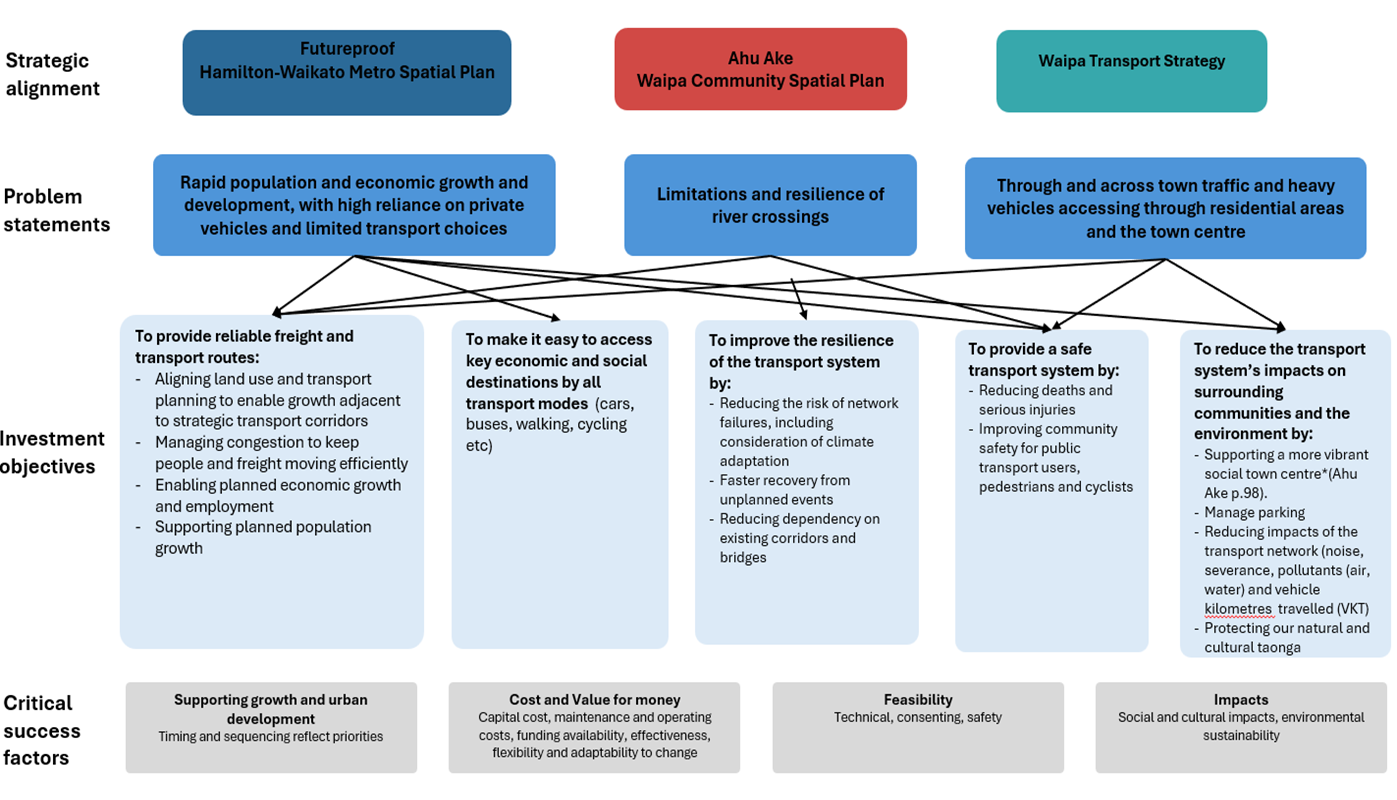
This is the proposed criteria for assessing the transport ideas are as per the strategic framework (see figure 1).
Elected Members will make decisions about these criteria on Wednesday February 4, at the Strategic Policy and Planning Committee.
- Strategic alignment with Futureproof Hamilton Waikato Metro Spatial Plan, Ahu Ake, Waipa Community Spatial Plan and Waipā Transport Strategy.
- Investment objectives – the outcomes sought as to ‘why’ we are investing. The investment objectives form a key part of the assessment criteria and the outcomes we are seeking as to the ‘why’ we are investing. The investment objectives have been developed to align with the district and wider sub-regional Hamilton Waikato Metro Spatial Plan outcomes and respond to the problem statements approved by the Strategic Planning & Policy Committee in December 2025.
- Critical success factors – the practical delivery conditions namely: supporting growth and urban development, cost and value for money, feasibility, social and cultural impacts and environmental sustainability.
Figure 1: Cambridge Connections strategic alignment with district and sub-regional plan outcomes
The strategic framework criteria has been developed using a bespoke Multi-Criteria Assessment (MCA) incorporating elements of both the NZTA Early Assessment Sifting Tool (EAST) and MCA criteria relevant for strategic transport planning. The approach was also informed by discussions with NZTA transport planning staff.
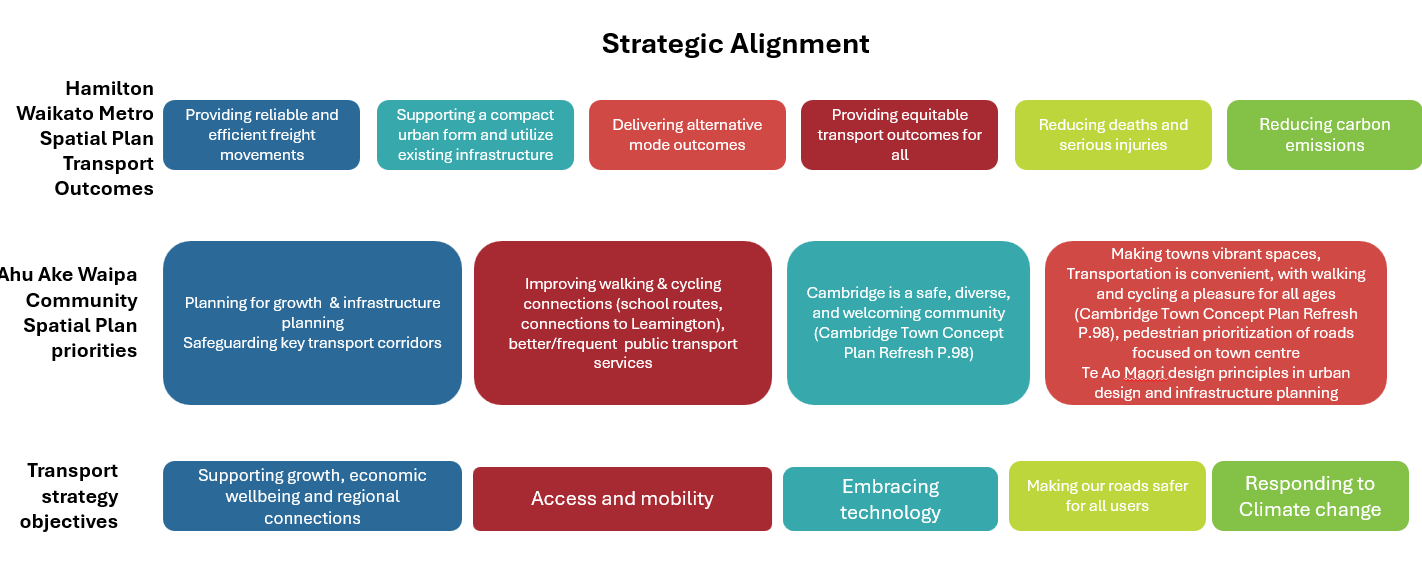
Figure 2: Cambridge Connections Strategic Framework:
We have added a comprehensive catalogue of project information, reports, local and national plans, as well as data and evidence. These resources support the development of the project - happy reading!