Latest updates
Stage two of Cambridge has kicked off with a community brainstorm of transport ideas. The Community Reference Group met on Wednesday, 3 February, and discussed the NZ Transport Agency Intervention Hierarchy. This guides what we plan for first, and what we do later, when it comes to creating a transport plan. The group particularly focused on the first two tiers of the hierarchy:
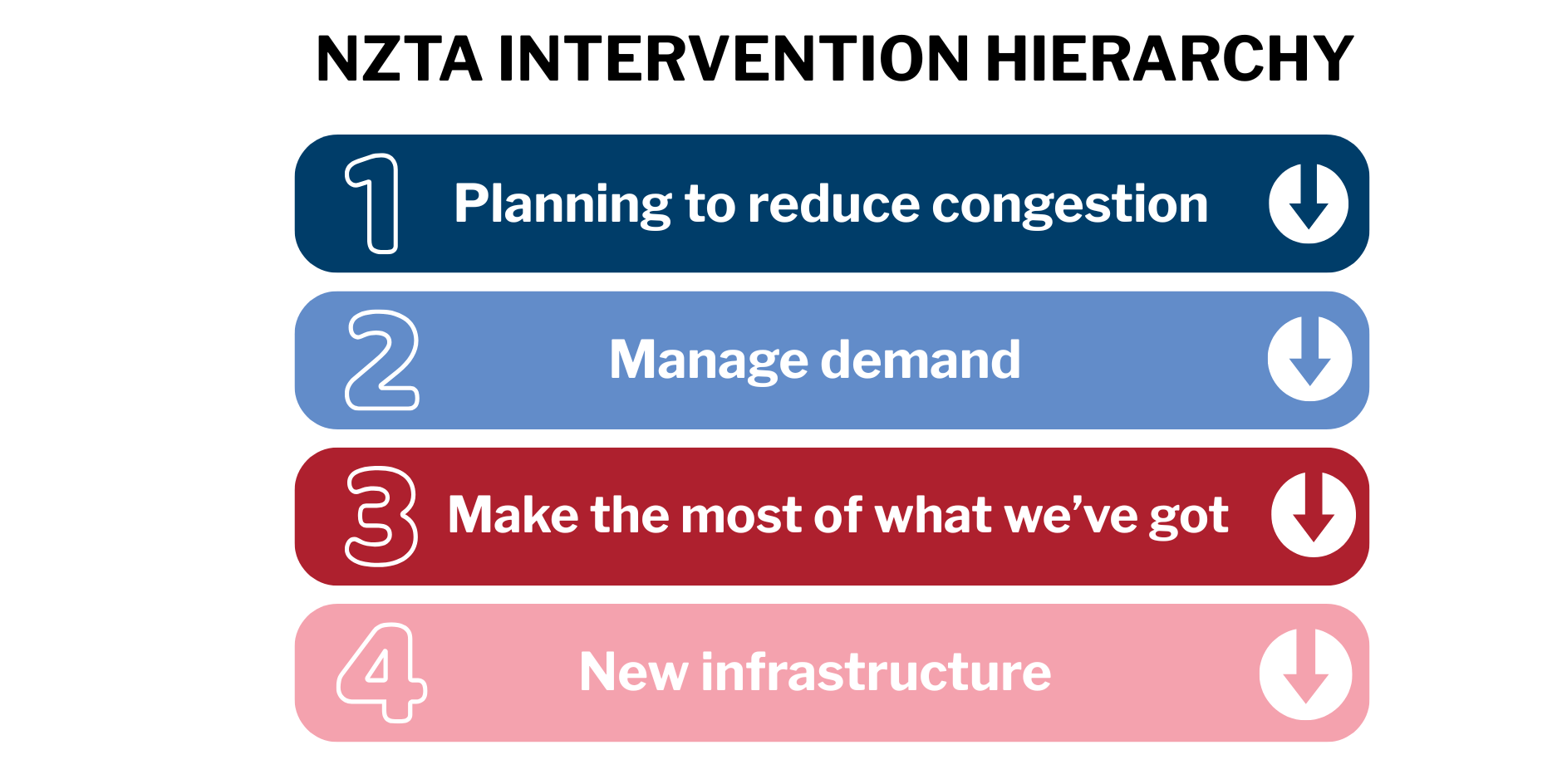
Here's a summary of the key ideas from the Community Reference Group
Integrated planning
Plan growth early and responsibly: Align development with early delivery of schools, amenities, and infrastructure; prioritise brownfield and higher-density housing, protect green spaces, and ensure developers fund growth impacts.
Build a connected, multimodal transport system: Create safe, continuous walking, cycling, public transport, and freight networks that link homes, schools, jobs, neighbourhood centres, and the CBD, and make better use of existing streets and spaces.
Make streets safer and centres stronger: Improve footpaths, crossings, visibility, and bike facilities—especially around schools and town centres—and strengthen neighbourhood centres so daily needs are accessible without car dependence.
Manage demand
Plan for growth up front: Deliver schools, services, and infrastructure alongside development, focus on higher-density and brownfield housing, protect green spaces, and ensure growth pays for growth.
Connect people and places: Build an integrated walking, cycling, public transport, and freight network that links homes, schools, jobs, neighbourhood centres, and the CBD.
Create safe, accessible centres: Improve streets, crossings, and bike facilities, especially around schools and town centres, so everyday needs are easy to reach without relying on cars.
Meet the members of the group
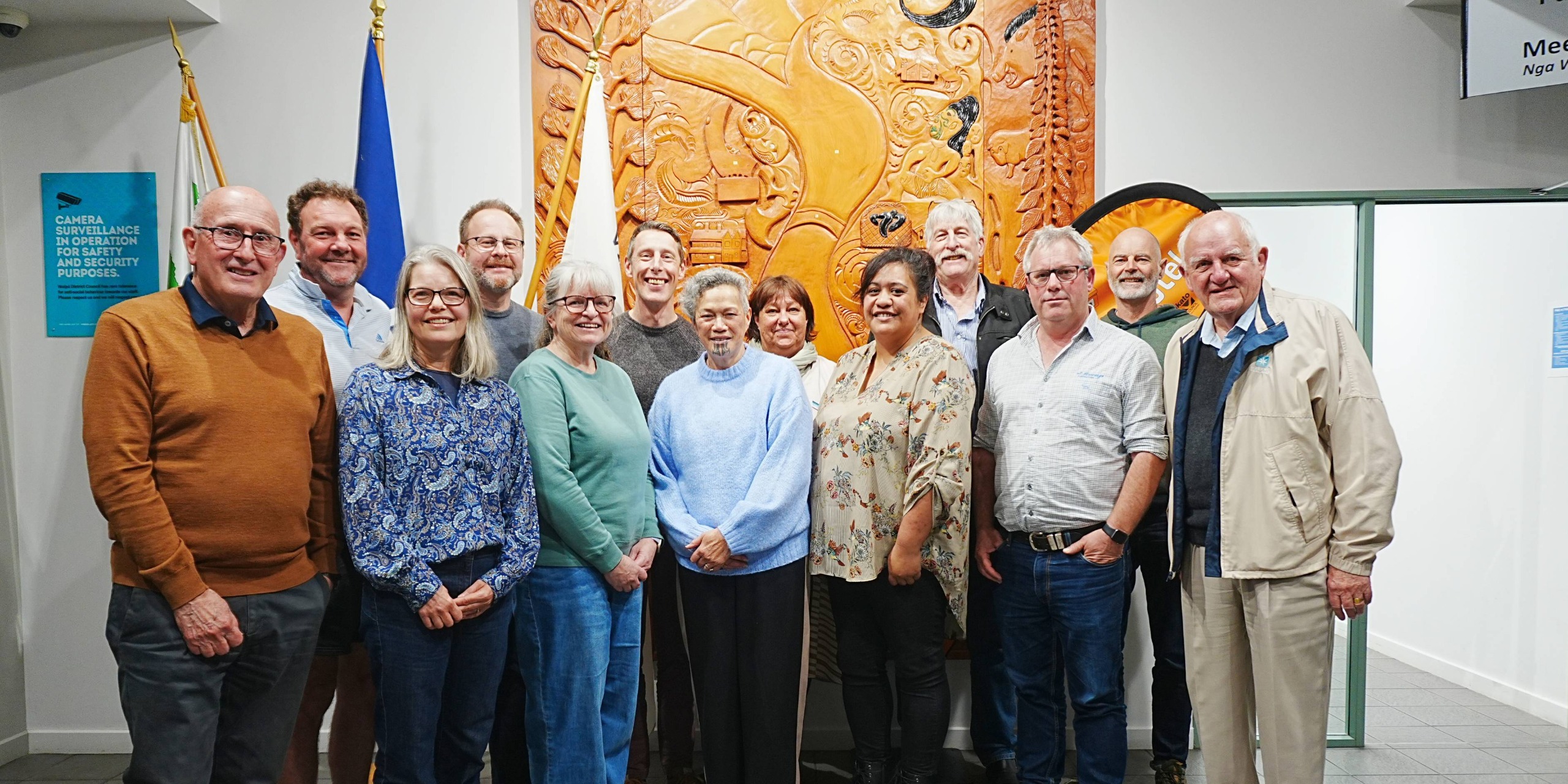
Members of the Community Reference Group (from left back): David Cooney, Alan Garvin, Chris Flatt, Phil MacKay, Kelly Bouzaid, Peter Pickett, Graham Scott. (From left front): Sharon Cresswell, Gabby Byrne, Poto Davies, Ngawai Hamblin, Ian Wilson, Peter Carr. (Kellie Pearson and Andrew Myers joined online)
What does the group do?
The group will help shape our plan for transport over the next 30 years, making sure that decisions reflect the values, priorities and vision of our local communities. The group will work closely with the Cambridge Community Board and Waipā District Council, to inform priorities, consider challenges and find solutions together.
Meetings & minutes
Meeting information
Date: Wednesday, May 13, 2026
Time: 5:15 – 6:45 pm
Location: Kaipaki Room, Waipā District Council, Cambridge Office, 23 Wilson Street, Cambridge, and via Microsoft Teams.
Meeting Agenda
Welcome and housekeeping
Workshop: Parking Management objectives
Workshop: Network options
General Business and Next Steps
Meeting information
Date: Tuesday, May 5, 2026
Time: 5:15 – 6:45 pm
Location: Kaipaki Room, Waipā District Council, Cambridge Office, 23 Wilson Street, Cambridge, and via Microsoft Teams.
Meeting Agenda
Welcome and housekeeping
Workshop: Public Transport
Workshop: Walking, Cycling & Micromobility Options
General Business and Next Steps
• Next CRG and other meetings
Meeting information
Date: Tuesday, April 14, 2026
Time: 5.15-6.45pm
Location: Kaipaki Room, Waipā District Council, Cambridge Office, 23 Wilson Street, Cambridge, and via Microsoft Teams.
Meeting Agenda
Welcome and housekeeping
- Appointment of Co-chair
- Introduction of Chris Gardner, Senior Comms Advisor
- Ways of working
Stage 2.2 - Approach and work required
- Overview of process for Stage 2.2 for CRG to test (to be presented at the meeting)
General business and next steps
- CRG meetings - dates and purpose
- Publication of feedback, theming and long list
- Other items
Meeting information
Date: Tuesday, March 3, 2026
Time: 5.15-6.45pm
Location: Kaipaki Room, Waipā District Council, Cambridge Office, 23 Wilson Street, Cambridge, and via Microsoft Teams.
Meeting Agenda
Community engagement
- Identify gaps in community engagement feedback to date
- Feedback from your networks
General business and next steps
Meeting information
Date: Wednesday, February 18, 2026
Time: 5.15-6.45pm
Location: Kaipaki Room, Waipā District Council, Cambridge Office, 23 Wilson Street, Cambridge, and via Microsoft Teams.
Meeting Agenda
Review of NZTA Intervention Hierarchy:
- Best use of existing system
- New infrastructure
Community engagement
- Report back from those who have been engaged with their networks
Meeting information
Date: Tuesday, February 3, 2026
Time: 5.15-6.45pm
Location: Town Hall, Victorian Room
Meeting Agenda
Review of NZTA Intervention Hierarchy:
- Integrated planning
- Manage demand
Community engagement
- using our networks
- dates of interest
Meeting information
- Date: Thursday, October 30 2025
- Time: 5:15pm - 6:45pm
- Location: Kaipaki Room, Waipā District Council, 23 Wilson Street, Cambridge
Meeting agenda
- Emerging problem statements
- Workshopping/brainstorming underlying causes
- Reflection from a transport perspective
- General business and next steps
Download minutes, meeting pack and agenda from Thursday, October 30.
Meeting information
- Date: Tuesday, October 14 2025
- Time: 5:15pm - 6:45pm
- Location: Kaipaki Room, Waipā District Council, 23 Wilson Street, Cambridge
Meeting agenda
- Context setting - questions for clarification
- Workshopping/brainstorming
- Key themes emerging
- General business and next steps
Meeting information
- Date: Tuesday, September 23 2025
- Time: 5:15pm - 6:45pm
- Location: Kaipaki Room, Waipā District Council, 23 Wilson Street, Cambridge
Meeting agenda
- Establishment of Community Reference Group framework
- Cambridge Connections - Questions and answers about the project
- Nominations and election of a Chairperson
- Transport visioning exercise: 'It's the year 2055: What would a good transport system look like?'
- Next steps (to December 2025)
Terms of reference
Read the full terms of reference or visit the terms of reference page.