Cambridge Connections - Trash ‘n Treasure Market
Drop-in session
Sunday February 8, 9am-12pm
Memorial Park, 62 Taylor Street, Cambridge

On the Radar is your fortnightly hub for essential information, updates and reminders. In this edition, Lake Te Koo Utu testing, digital lending soars at Waipā libraries and preparing for Stage Two of Cambridge Connections
Drop-in session
Sunday February 8, 9am-12pm
Memorial Park, 62 Taylor Street, Cambridge

Despite the weather, this week we successfully carried out water and sediment testing in Lake Te Koo Utu. There was keen public interest in what was going on, as the samples were collected by kayak.
Ngāti Haua and Ngāti Koroki Kahukura provided cultural monitoring, and we worked in partnership with the Ministry for Primary Industries and Waikato Regional Council.
The testing aims to help us understand last year’s fish deaths and get a clearer picture of the lake’s overall health. The results will guide future efforts to improve and protect the health of the lake.
Health warnings for cyanobacteria (blue-green algae) remain in place at Lakes Ngā Roto and Arapuni. Across the Waikato region, the number of affected lakes has reduced from eight at the start of the year to five.
These warnings are issued when algae levels reach a point that can pose a risk to people and animals, particularly dogs. Council staff will continue working with Health New Zealand, keep stakeholders informed, and maintain on-site signage so communities can make informed choices about using the lakes.
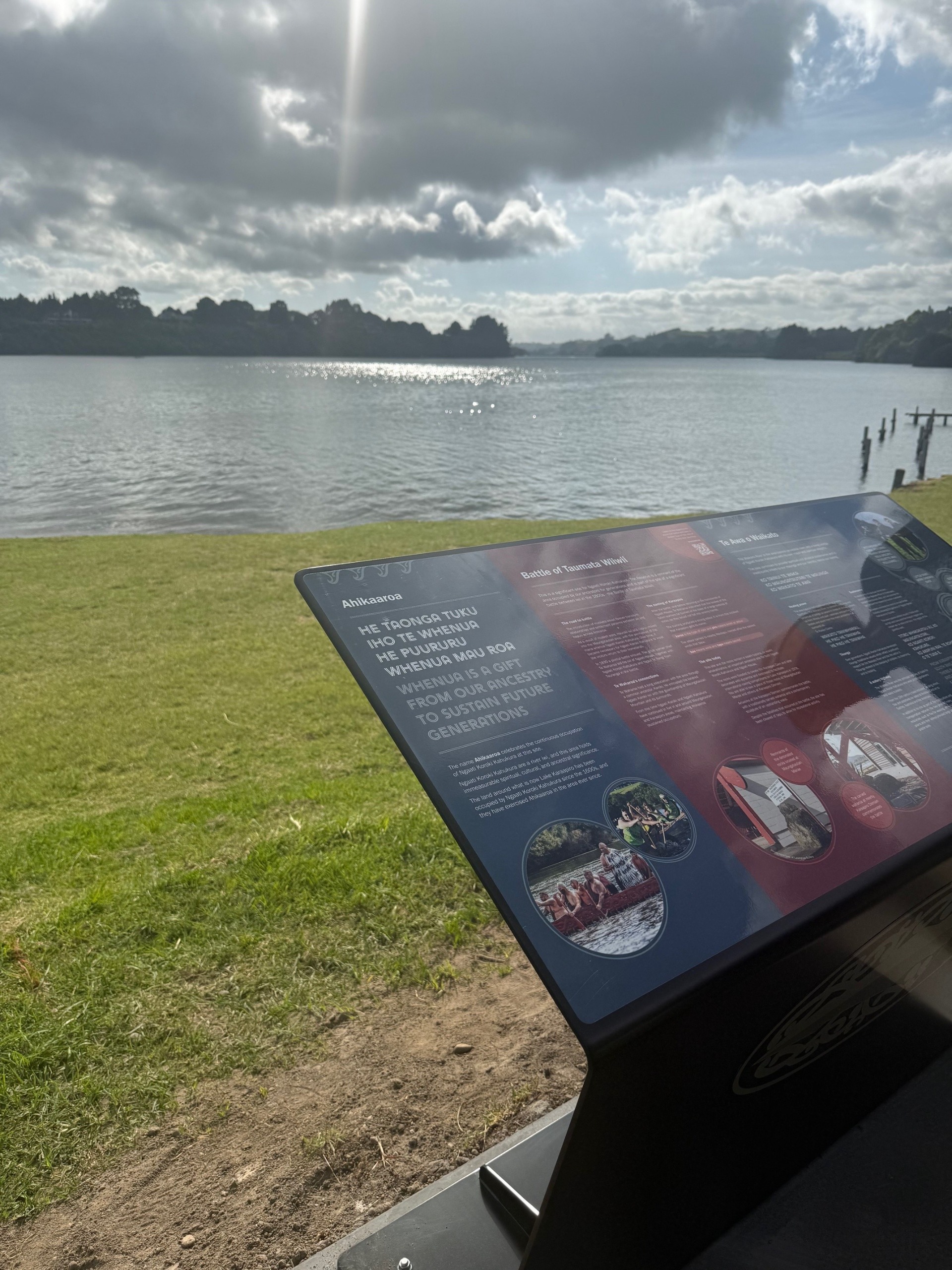
Ngāti Koroki Kahukura unveiled a new storyboard at Ahikāroa, part of Taumatawīwī Reserve on Maungatautari Road, south of Karāpiro Domain, on Saturday, January 10.
The storyboard celebrates the return of the reserve to Ngāti Koroki Kahukura, shares the story of the battle of Taumatawīwī, and highlights the cultural significance of the site. This project was supported by Mercury.
Taumatawīwī Reserve was returned to Ngāti Koroki Kahukura in 2014 as part of their Settlement Act.

Te Whare Taonga o Te Awamutu Museum is partnering with Cambridge Museum to offer hands-on Waitangi Day activities from February 5-9. These are a great way for whānau to connect with each other and with Te Tiriti o Waitangi.
At Te Awamutu Museum:
At Cambridge Museum:
A Waitangi Day activity book will be available for tamariki, alongside opportunities to explore existing displays and engage in conversations about Te Tiriti. Activities are being promoted through the museums’ social media channels.

Waipā’s libraries continue to be well-used, both online and in-person. E-loans jumped from 11,764 in 2024 to 17,326 in 2025 – nearly a 50 percent increase – showing more people are enjoying the flexibility of borrowing audiobooks, movies and other digital resources.
Cambridge Library continues to lead in lending, with 325,407 items borrowed in 2025, up from 313,231 in 2024. Te Awamutu lent 166,722 items, slightly below 172,466 the previous year, but visitor numbers remain high, highlighting its role as a community hub.
In-person visits grew steadily with Cambridge welcoming 86,735 visitors, while Te Awamutu hosted 85,702. With its larger physical space and community rooms, Te Awamutu remains a key spot for study, computer access, and group activities.
These trends show Waipā libraries are expanding digital access while continuing to provide vital spaces for learning, connection, and community engagement.
Stage two of Cambridge Connections is launching next week, with the opportunity for a ‘community brainstorm’ where all ideas are welcome. Feedback will be open for six weeks from Tuesday, January 27 for those involved in the Ideas Forum, with the wider community invited to give feedback from Wednesday, February 4.
The online Ideas Forum will have early access to feedback questions, alongside a dedicated discussion page and in-depth topics. Feedback will close on Monday, March 9.
During this stage, we will ask key questions that build on stage one, with a clear link from the development of problem statements to potential solutions we are seeking in stage two.
To set the community up for success, we will provide context for feedback based on the NZ Transport Agency Intervention Hierarchy. This will help the public consider how to make the most of what already exists before considering long-term, new infrastructure -ensuring the community is able to provide input into a full suite of transport ideas.
Ideas will be assessed to develop a ‘long list’ of options for the Strategic Policy and Planning Committee to consider on Wednesday, April 1.
Key engagement dates for the upcoming fortnight: January 23 – February 5
When | What |
27 January | Ideas Forum Opens |
27 January | Ideas Forum: Discussion Page Opens
|
3 February | First Community Reference Group Meeting |
4 February | SP&P Committee
|
4 February | General public engagement opens |
4 February | Ideas Topic: Heavy Weight Issues Discussion board on hot topics open |
4 February | Media release: Stage Two Public Engagement Opens |
5 February | Full page informational ad in Cambridge News |
We are currently preparing to inspect the Pirongia to Te Awamutu water main, with work planned to start on Tuesday (January 27). The information collected from testing will help us determine any issues with the water main and its performance, reduce overall pipe failure, prioritise maintenance and plan for renewals.
This work had been planned for some time, and the water pipe break at the end of last year, which impacted Pirongia and Te Awamutu, has amplified its importance. The test results, expected in June 2026, will give us more accurate, detailed data on the condition of this water main and help us avoid future water outages.
The pipe runs through multiple private properties and we will be working with residents with regard to access between January and March.
We are using a new modelling approach which allows us to gain more in-depth information on the state of the water main, test a larger area, and can usually be done without water shutdowns. The project team will try to avoid any shutdowns unless necessary. If a shutdown is needed, we will give residents notice and try to minimise the impact where possible.
The last update from the team behind the Southern Wastewater Treatment Plant project came through just before Christmas, after the last edition of On the Radar had been issued.
We have attached the community newsletter issued in late December. Community Newsletter December 2025
The project team advise that an Elected Member pack is being prepared, and they are working on arranging a briefing on the site selection process for Elected Members from both Waipā and Waikato District Councils.
Roads to be resealed around the district over the next two weeks:
Waipā will play a key role in attracting more Australian visitors to the Waikato, thanks to a $459,000 Regional Tourism Boost Fund investment supporting Hamilton & Waikato Tourism’s One Flight campaign. With direct flights into Hamilton Airport, right here in Waipā, visitors can quickly explore local experiences.
The campaign will also promote onward travel to Waitomo, Taranaki, Ruapehu and Taupō.
Activity includes:
All campaign content will be available on waikatonz.com/australia-waikato
The campaign goes live over February/March, with visitor arrivals between April and June serving as the main measure of success.
This initiative highlights Waipā’s role as an international gateway and strengthens the district’s connection to high-quality visitor experiences across Waikato and the Central and Western North Island.
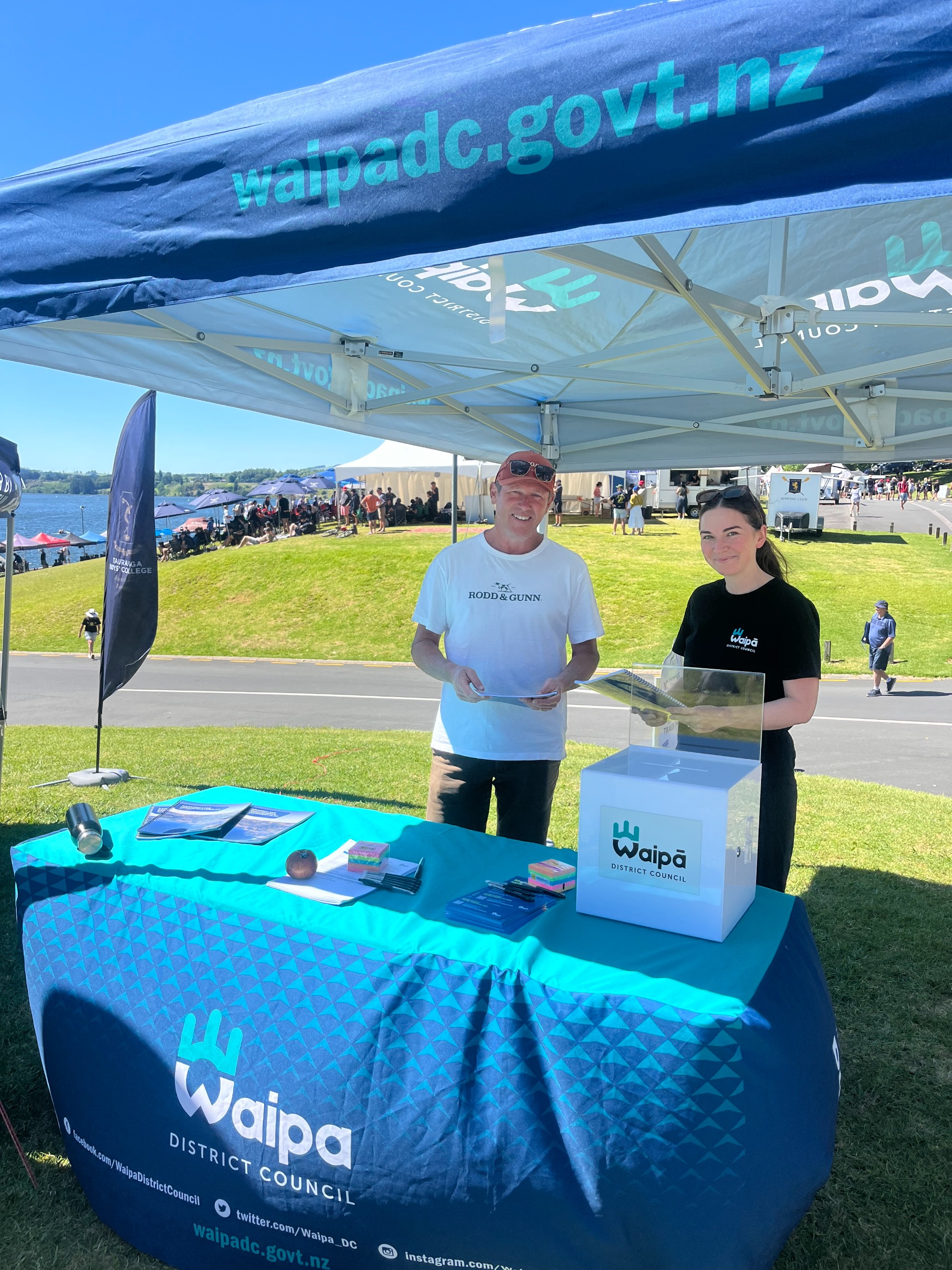
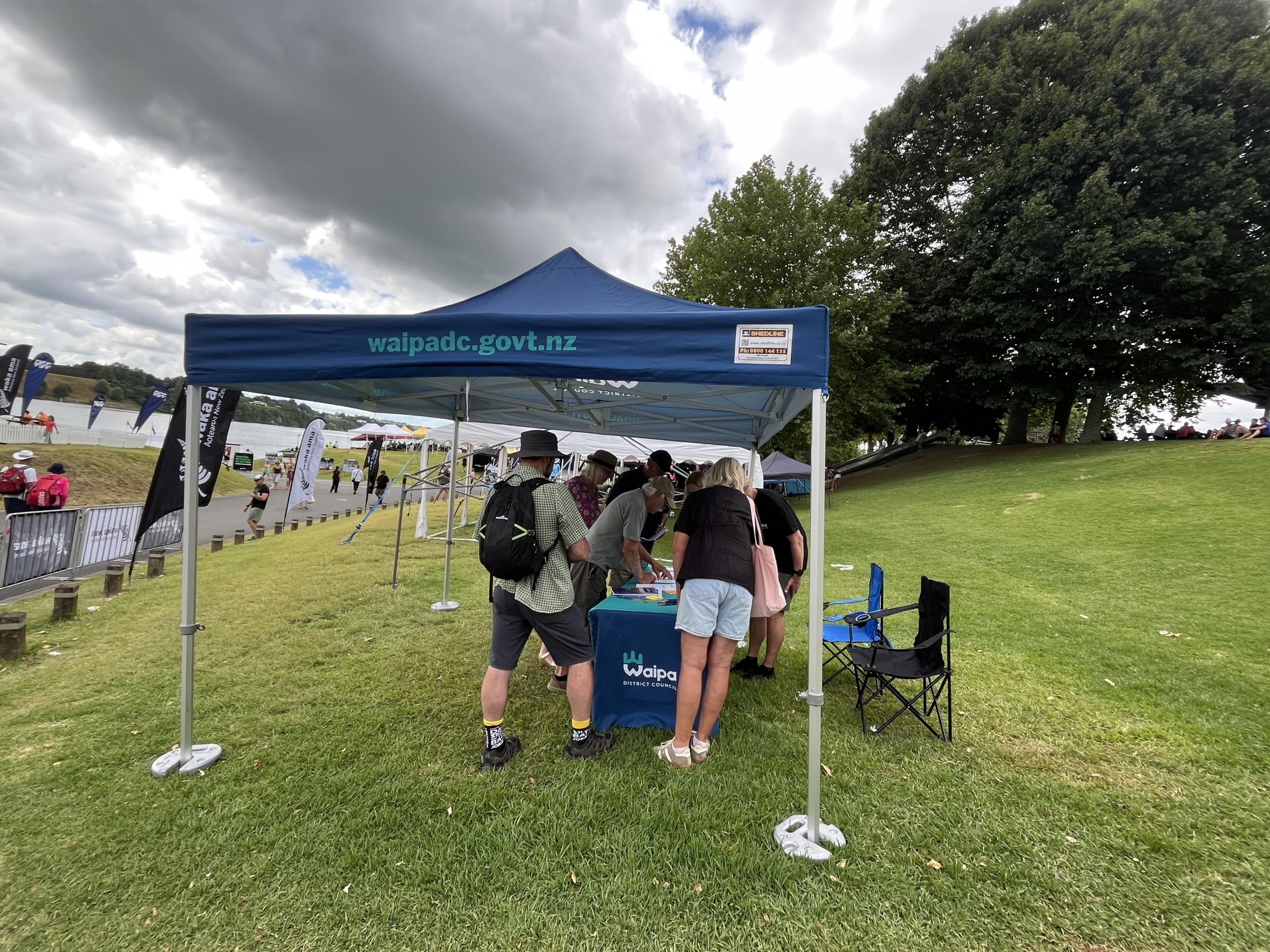
Consultation on the Karāpiro Lake Domain Reserve Management Plan and Masterplan closed on Tuesday, January 20.
More than 630 submissions have been received, including feedback from lake users, recreational groups, event organisers, adjoining neighbours and out of district visitors.
Staff are now working through submissions to confirm the next steps for this process.
We actively monitor the changes to legislation being proposed by Central Government, and want to keep elected members across the latest changes, submissions and directions.
The table below lists the changes that have occurred over the last fortnight.
Item Name | Description | Comment |
This Bill will replace the Civil Defence Emergency Management Act.
|
| |
Resource Management - Natural Environment Bill and Planning Bill | Natural Environment Bill This Bill will replace the Resource Management Act, along with the Planning Bill.
Planning Bill This Bill will replace the Resource Management Act, alongside the Natural Environment Bill. The Bill will establish a new planning system for the use and development of land. The proposed changes will include:
|
|
The Government will implement a rates cap to limit council rate increases. The proposed model will:
|
| |
Simplifying Local Government / Proposed changes to regional councils and local government structure | The Government is proposing to change the local government system, alongside its upcoming resource management reforms. The proposed changes include:
|
|
Infrastructure Funding and Financing Act – Development levies
| The Government is proposing changes to replace development contributions with a new development levies system. The key changes will include:
|
|
This Bill will change the Infrastructure Funding and Financing Act and the Local Government (Rating) Act. The key changes will include:
The Government will formally introduce the Bill to Parliament in mid-2026. |
| |
| ||
Legislation Commences | ||
Building and Construction (Small Stand-alone Dwellings) Amendment Act 2025 | This Act changes the Building Act, Local Government Act 2002, Local Government Official Information and Meetings Act, Plumbers, Gasfitters, and Drainlayers Act, Electricity (Safety) Regulations, Gas (Safety and Measurement) Regulations, and related regulations. The purpose of the Act is to reduce the time and cost of building a granny flat by permitting small stand-alone dwellings up to 70 square metres to be built without obtaining a building consent, given certain conditions are met. These conditions are:
|
|
Plumbers, Gasfitters, and Drainlayers Amendment Regulations 2025 | These regulations change the Plumbers, Gasfitters, and Drainlayers Regulations by adding new regulations 10 and 11 and a new Schedule:
|
|
Resource Management (National Environmental Standards for Detached Minor Residential Units) Regulations 2025 | These regulations set out national environmental standards for minor residential units that are completely detached from their principal residential units (Detached Minor Residential Units or DMRUs). They provide that:
|
|
Resource Management – National Policy Statements | The following National Policy Statements were released as part of the reform associated with the Natural Environment Bill and Planning Bill:
|
|
Waka Ama Sprint Nationals growing with 800 more paddlers than previous year EveningReport.nz • Internet • 16 Jan 2026, 2:53 pm
Focus on public relations
Cambridge News • Chris Gardner • Internet • 15 Jan 2026, 2:03 pm
Candidate costs revealed
Cambridge News • Chris Gardner • Internet • 15 Jan 2026, 9:45 am
News in brief
Te Awamutu News • Internet • 07 Jan 2026, 4:05 pm

Have questions or want to learn more about a project, contact us below:
| Phone | 0800 924 723 |
|---|---|
| info@waipadc.govt.nz | |
| Website | www.waipadc.govt.nz/ |
Get notifications on what's happening in your town.
| Website | www.waipadc.govt.nz/antenno |
|---|